
Turning a Brampton basement into a legal, long-lasting second suite
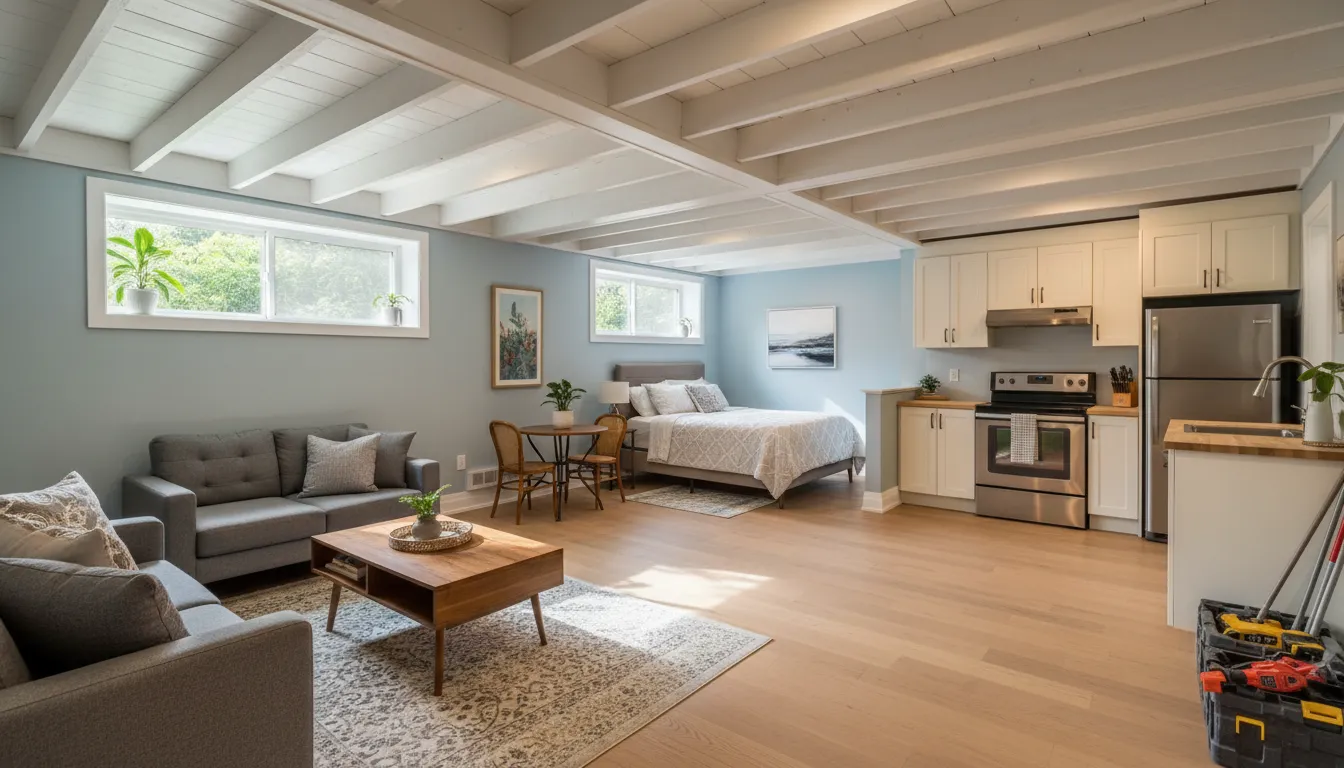
Converted an unfinished basement into a code-compliant, rentable second unit while respecting the home's character and neighbourhood rules.
- 1
Site assessment, testing and permitting
We began with a full site inspection and non-invasive moisture tests, plus a review of Brampton zoning and Region of Peel policies. Our permit set included floor plans showing the separate entrance, egress windows sized to Ontario Building Code provisions, and mechanical/electrical schematics for the new suite.
- 2
Waterproofing and foundation prep
Where water staining or dampness appeared we installed interior drain tile tied to the sump with a high-capacity submersible pump and battery backup. We applied a breathable parge coat to the foundation and a vapour-control strategy that avoids trapping bulk moisture behind insulation.
- 3
Framing, insulation and sound control
We framed 2x4 stud partitions using pressure-treated bottom plates where they met concrete, and furred down beams to meet 2.0 m (or required) ceiling clearance while concealing services. We installed Roxul Safe’n’Sound and closed-cell spray foam around rim joists to manage sound and thermal bridging, which helps with year-round comfort in the Brampton climate.
- 4
Mechanical and electrical separation
To meet code and owner preference we provided a separate gas-fired high-efficiency condensing furnace and an independent HRV unit sized for the suite’s floor area, with dedicated duct runs and controls. Electrical work included a new sub-panel for the suite, GFCI protection in wet areas, and separate smoke/CO2 interconnected alarms as required by provincial code.
- 5
Finishes built for rental life
We used porcelain tile in the bathroom and entry (moisture resistant, easy to clean), durable low-VOC vinyl plank flooring in living areas, and semi-gloss latex paint for trim that stands up to cleaning. The kitchen received solid-core shaker cabinets, a quartz countertop and Energy Star appliances chosen for longevity.
Frequently Asked Questions
How long does a conversion like this typically take?
For a standard-size Brampton basement with permitting, expect roughly 10–14 weeks from permit approval to final inspection. That timeline varies with inspection scheduling, complexity of mechanical separations and any unforeseen foundation repairs.
How disruptive will construction be to our household?
We stage work to limit disruption: demolition and foundation work first, then mechanical rough-ins, and finishes last. Because Brampton winters and humid summers affect drying and scheduling, we plan the wet trades to avoid weather delays and keep living areas usable.
When is a legal second suite required instead of a simple basement apartment?
If the unit is intended for separate tenancy it must meet Ontario Building Code and local Brampton zoning rules — that means proper egress, fire separation, mechanical and electrical separation, and sometimes separate metering. If you plan to rent the space long-term, treating it as a legal suite reduces future liabilities.
Will the finished suite affect my insurance or taxes?
Typically insurers and taxation authorities require disclosure of a legal second suite; policies and assessments vary. We provide the documentation you need to discuss the change with your insurer and the City of Brampton's building department to keep everything above board.
Interested in a legal suite for your Brampton home?
We’ve built compliant, long-lasting suites across Brampton, Peel Region and neighbouring Mississauga with clear paperwork and seasonal know-how.
Get a Free Quote