
Going Open Concept: Structural Realities to Know First
What structural, permit, and planning realities you should know before removing walls.
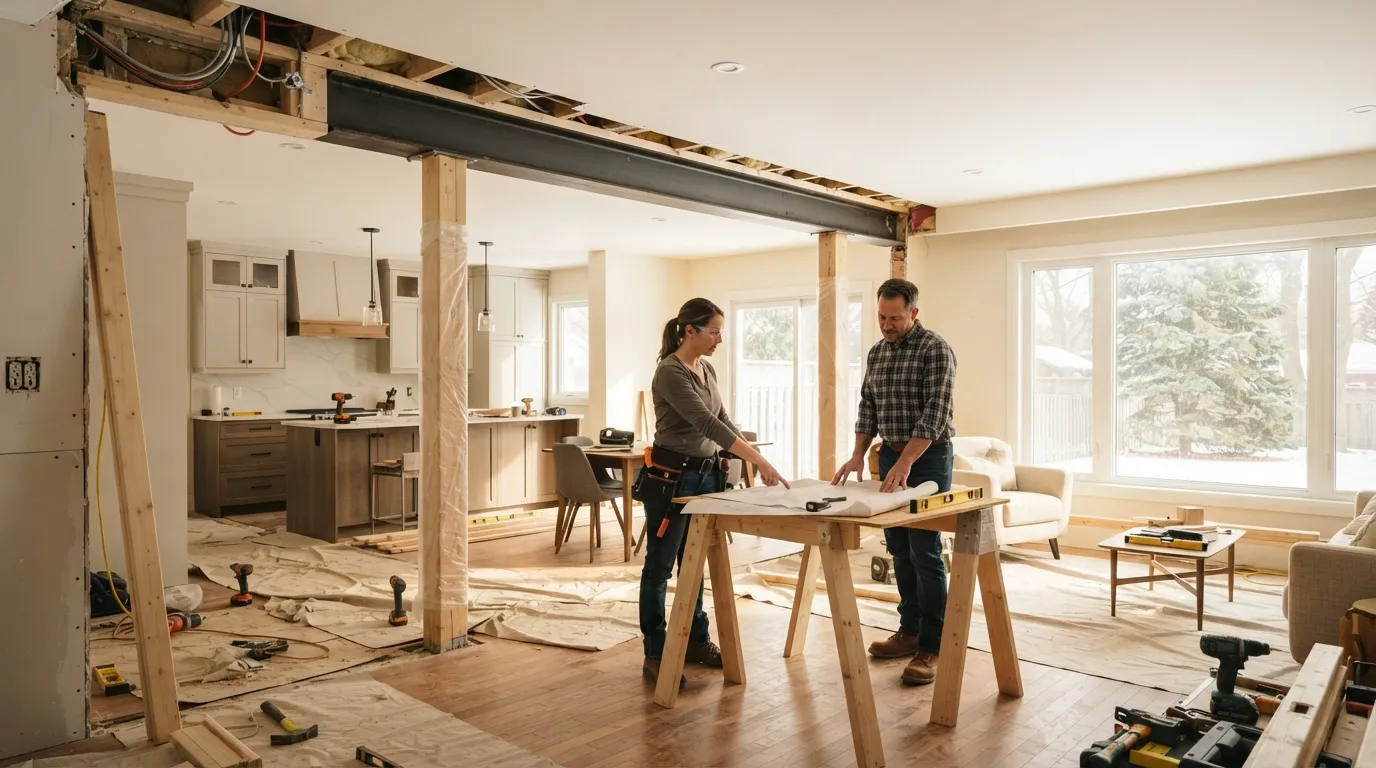
Can I safely remove this wall to create an open concept?
Not every wall can be removed—start by confirming whether it’s load-bearing and if services (plumbing, HVAC, electrical) run through it; if it is load-bearing, you’ll need structural solutions or to keep it. Assessing safely requires a site inspection, permit checks with Oakville’s building department, and a structural plan from a qualified engineer or experienced renovator.
Load-bearing vs non-load-bearing
A non-load-bearing partition carries no vertical structural loads and is often safe to remove. Load-bearing walls support floor joists, roof loads, or transfer loads to foundation; cutting them without proper replacement beams or columns risks collapse or cracking. An engineer identifies load paths and specifies beams (LVL, glulam, steel) sized for your span.
Hidden systems inside walls
Walls often conceal plumbing stacks, gas lines, HVAC ducts, or electrical runs; moving or rerouting these systems adds cost and coordination. A thorough demolition inspection—sometimes partial removal of drywall—reveals what must be relocated and whether alternate layouts are feasible.
Span and beam options
For load-bearing removals, common replacement options are engineered laminated veneer lumber (LVL), glued-laminated timbers (glulam), or steel beams. Choice depends on span length, loads, clearance needed, and budget. Steel often needs smaller profiles but requires fireproofing and proper bearing on supports; LVLs are simpler to install in many residential jobs.
Local climate and material considerations
Oakville, ON sits in a climate with freeze-thaw cycles; moisture control at new openings and roof/attic continuity matter to prevent rot and movement. Insulation, air barrier details, and flashing at any new openings should be addressed as part of the structural work to protect the altered assembly.
Step-by-Step: Going Open Concept: Structural Realities to Know First
A practical sequence to move from idea to safe, permitted open-concept space.
- 1
1. Visual review and measurements
Walk the space and photograph the wall from both sides, noting joist directions, upstairs loads, and visible services. Measure the span you want to open and take ceiling, floor, and roof profile photos to share with a professional.
- 2
2. Hire an engineer or qualified renovator for inspection
A structural engineer or an experienced renovator will inspect, confirm load-bearing status, and recommend beam sizes, bearing points, and temporary shoring. For complex roofs or multi-story bearing walls, an engineer’s stamped drawings are often required for permits.
- 3
3. Check permits and local rules
Contact the Town of Oakville building department to confirm permit requirements and submission materials; in Ontario, structural alterations usually require a building permit and may need engineer's drawings. Verify any conservation authority or heritage rules if your property sits in a regulated area, and always confirm local requirements.
- 4
4. Plan mechanical and electrical relocations
If the wall contains plumbing, ducts, or wiring, get trades to price relocations and sequence work so systems are in place when the new opening is framed. Coordinating mechanical changes early keeps the structural timeline smooth and avoids rework.
- 5
5. Prepare for temporary support and demolition
Install temporary shoring or support beams under the guidance of the engineer before cutting the wall. Proper shoring protects floors and roofs from unintended load transfers during beam installation.
- 6
6. Install permanent beam, posts, and finishes
Erect the specified beam (LVL, glulam, or steel), provide proper bearing on footings or existing foundations, and install posts, shoes, or pads as required. Finish with fire-stopping, insulation, and trim; retain inspection sign-offs from the local building office when required.
Mistakes to Avoid
Open-concept projects that go wrong often fail at planning steps: misidentifying load-bearing walls, under-budgeting relocations of plumbing/electrical, or skipping permits and inspections. Avoid common traps by documenting, consulting licensed pros, and building a realistic schedule and contingency into your plan.
Assuming every interior wall is non-structural
A wall that looks simple can carry floor, roof, or stair loads. Never demo based on guesswork—have a pro confirm the wall’s role and recommend temporary shoring and replacement supports if needed.
Underestimating mechanical relocations
Moving a kitchen wall often requires rerouting plumbing and gas lines and relocating range hoods and ducts. Get trade quotes before you commit to a design; mechanical work can change layout decisions and add weeks to the schedule.
Skipping permits and inspections
Permits protect you and future buyers by ensuring work follows the Ontario Building Code and local Oakville rules; skipping them risks fines and problems during resale or insurance claims. If unsure about permit rules, call Oakville’s building department to confirm what’s required for your scope.
Choosing price over experience for structural work
A low bid might cut corners on beam sizing, bearing details, or shoring practices. Prioritize contractors with proven structural renovation experience, references, and appropriate insurance—especially for work that affects the home’s load path.
What Affects Your Outcome
Several practical factors change cost, timing, and feasibility.
Wall function and load path
Whether the wall supports joists, a roof ridge, or just partitions determines the complexity of replacement and the type of beam required.
Presence of mechanical systems
Plumbing stacks, HVAC ducts, and gas lines inside the wall increase scope and coordination between trades, raising cost and schedule risk.
Span length and beam choice
Longer spans need larger or stronger beams—steel versus LVL decisions affect cost, ceiling height, and finishing details.
Foundation and bearing capacity
New concentrated loads from posts or beams must bear on adequate foundations or pads; otherwise, you may need to provide new footings or retrofit supports.
Permit, inspection, and local-code requirements
Oakville and Halton Region practices can require stamped drawings and inspections; compliance affects timeline and final approval—always verify with local authorities.
Contractor skill and scheduling
Experienced crews manage shoring, beam insertion, and trade coordination efficiently; poor sequencing increases downtime and cleanup costs.
Frequently Asked Questions
Do I always need a structural engineer to remove a wall?
Not always, but if the wall is load-bearing, spans large openings, supports roof or multiple floors, or the work affects foundations, an engineer should provide drawings and calculations. Many municipalities, including Oakville, commonly expect stamped plans for structural alterations—verify with your local building department.
How much will it typically cost to open a wall?
Costs vary widely: removing a non-load-bearing partition is relatively inexpensive, while replacing a load-bearing wall with a beam can run from a few thousand dollars into the high five figures depending on span, beam type, mechanical relocations, and finishes. Get multiple quotes and include contingencies for hidden conditions.
Will removing a wall change my home’s energy performance?
Yes—opening spaces can alter airflow and thermal loads, especially when a wall separated conditioned from unconditioned spaces. Address insulation continuity, HVAC balancing, and airtightness in the new layout to avoid drafts and higher heating/cooling costs.
Do I need a permit for a knock-through in Oakville, ON?
Structural knock-throughs commonly require a building permit in Oakville under Ontario Building Code rules; requirements vary by project complexity. Contact Oakville’s building department to confirm submission needs and whether an engineer’s stamped drawings are required.
How long does a typical open-concept structural job take?
For a straightforward single-wall removal with minimal mechanical work, physical construction may take a few days to a week. Complex jobs with mechanical relocations, new footings, or finishes can stretch to several weeks; permit review and scheduling of trades add time.
What should I ask a contractor before starting?
Ask about their structural renovation experience, whether they use engineer-stamped drawings, sample projects, insurance coverage, and how they handle temporary shoring and trade coordination. Also request a clear scope, timeline, and change-order process so surprises are minimized.
Free on-site structural review for open-concept plans
Schedule a no-pressure inspection in Oakville, Halton County, or nearby Mississauga and Burlington to see what your wall really does and get a ballpark estimate.
Get a Free Quote